
Food
What to eat in Cyprus: the north's table, explained
Eat şeftali kebabı — minced lamb wrapped in caul fat and grilled — and hellim, the cheese the rest of the world calls halloumi. Order a meze and clear your evening: it is not a starter, it is fifteen to twenty plates arriving in sequence over two hours.
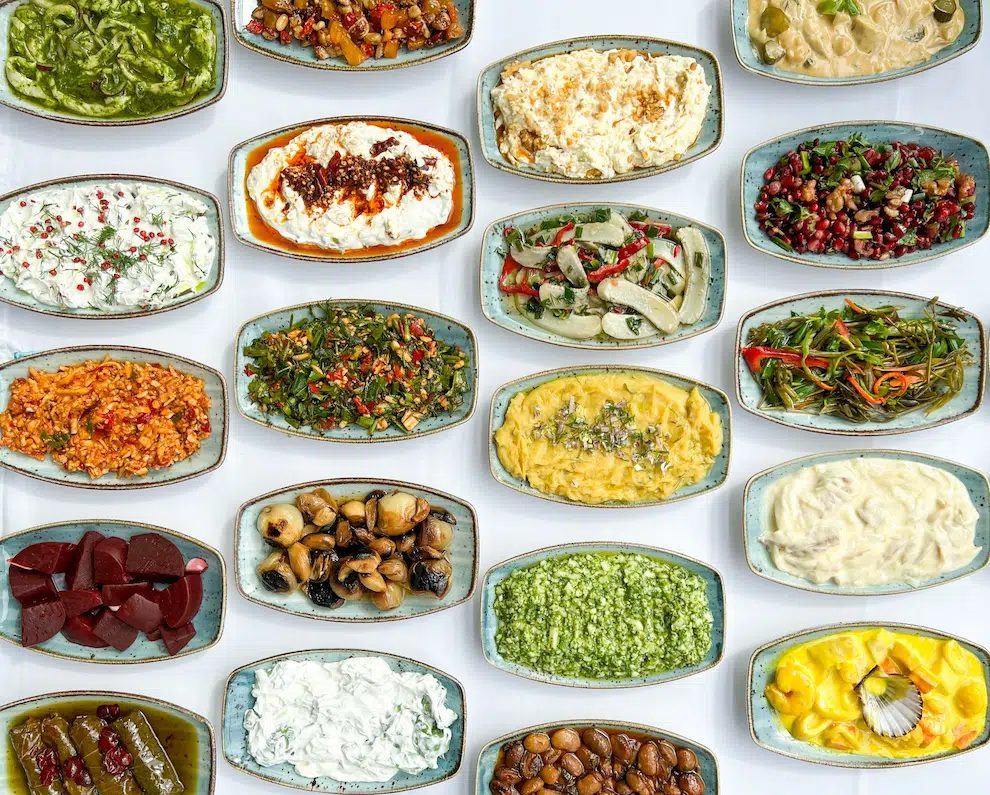
Cypriot food is one cuisine that history gave two vocabularies. Cross the Green Line and the recipe often survives intact while the name changes entirely — the same grilled cheese, the same yoghurt dip, the same lamb baked for hours in a sealed clay oven. This guide is about the northern table, with the southern name given alongside, because knowing both is the fastest way to understand what you're eating.
Meze is not a starter
The single most useful thing to know before your first dinner. Cyprus's official tourism body describes meze as running to roughly fifteen to twenty plates, dips and bread included, and up to thirty in some places. It is not an appetiser. It is the meal, and it is priced per person.
It also has a rhythm, and it is worth pacing yourself against it:
- Cold first. Olives, cacık, tahini, hummus, a village salad, bread.
- Then the warm small plates. Grilled hellim, köfte, sigara böreği, calamari.
- Then the grills and stews. This is where şeftali kebabı arrives, and where newcomers discover they are already full.
- Then fruit, or a spoon sweet. Walnut or bitter-orange, preserved in syrup, served with coffee.
Do not fill up on plates one to eight. Everyone does it once.
Sources: Visit Cyprus — mezedes, Travel With Hello — northern Cyprus food and dining.
The glossary: one dish, two names
This is the table we wish someone had handed us. The Turkish name is what you'll see on a menu in the north; the Greek name is what the same thing is called across the line.
| Turkish | Greek | What it is |
|---|---|---|
| Hellim | Χαλλούμι · Halloumi | Brined sheep-and-goat's-milk cheese that does not melt — so it is grilled or fried, with mint and lemon. |
| Şeftali kebabı | Σιεφταλιά · Sheftalia | Minced meat, onion and parsley wrapped in caul fat and grilled. In the north it is lamb. |
| Hırsız kebabı | Κλέφτικο · Kleftiko | Lamb sealed in a clay oven for hours. Both names mean thief — the meat was stolen and cooked hidden. |
| Molehiya | μολόχα · Molocha | A dark, thick stew of jute mallow leaves with lamb or chicken. Northern signature, and an acquired texture. |
| Kolokas | Κολοκάσι · Kolokasi | Taro root, cooked like a potato, usually in a stew. |
| Pilavuna | ~Φλαούνα · Flaouna | Sweet-savoury pastry of hellim, mint and sultanas. The Greek Easter flaouna is its cousin. |
| Magarına bulli | Μακαρόνια · Makaronia | Pasta in chicken broth, buried under grated hellim. |
| Dolma / yaprak sarma | Κουπέπια · Koupepia | Vine leaves or vegetables stuffed with mince, rice and herbs. |
| Çakıstez | Τσακιστές · Tsakistes | Green olives cracked with a stone, dressed with coriander, lemon and garlic. |
| Samarella | Τσαμαρέλλα · Tsamarella | Salted, sun-dried goat meat, cured with oregano. |
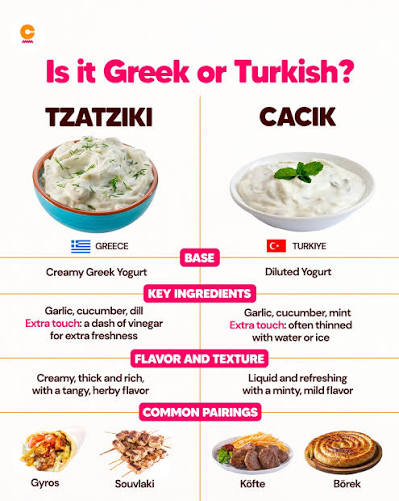
| Cacık | Τζατζίκι · Tzatziki | Yoghurt, cucumber, garlic, mint. Identical bowl, different name. |
| Macun | Γλυκό του κουταλιού · Spoon sweets | Walnut, fig or bitter orange preserved whole in syrup, eaten a spoonful at a time. |
| Ekmek kadayıfı | — | Syrup-soaked bread pudding filled with nor, a fresh unsalted whey cheese. |
| Pirohu | — | Dumplings filled with hellim instead of meat. |
Sources: Cypriot cuisine, Sheftalia, Cyprus Paradise, North Cyprus International. Spellings vary between villages; menus are not standardised.
Hellim, and the halloumi question
Everyone tells you to try halloumi. Almost nobody tells you what happened to it, and it is a genuinely interesting story about this island.
In 2021 the name Χαλλούμι / Halloumi / Hellim was registered in the EU as a Protected Designation of Origin (PDO). Since 1 October 2021, cheese sold in the EU under any of those three names must be made on the island of Cyprus, to the registered specification. Crucially, the protection covers the whole island — producers on both sides of the Green Line may apply, and the certification body, Bureau Veritas, inspects island-wide.
The first Turkish Cypriot producer was certified in February 2023. By the end of 2024, four producers and twenty-four dairies in the Turkish Cypriot community held certificates of conformity. The European Commission also adopted a decision allowing certified Turkish Cypriot hellim to cross the Green Line for trade, provided the cheese — and the milk it was made from — meets EU animal-health and food-safety standards.
The catch, and it is not a small one: Turkish Cypriot producers still cannot ship directly to the rest of the EU. Every wheel travels south across the line first. Producers in the north have also disputed the cow-versus-sheep-and-goat milk ratio written into the specification, and asked for a long transition period.
None of which changes what is on your plate. Hellim is firm, salty, made from a blend of goat's and sheep's milk — some varieties include cow's milk — and it does not melt when heated. That is the whole trick. Grilled until it squeaks and browns, with mint and a squeeze of lemon.
Sources: European Commission, DG Agriculture — first Turkish Cypriot halloumi/hellim certified PDO; European Commission — Green Line Regulation; T-VINE, on the Turkish Cypriot producers' remaining obstacles.
The five dishes worth planning a day around
Şeftali kebabı
The north's signature. Minced lamb, onion and parsley wrapped in caul fat, grilled over charcoal until the fat renders and the parcel crisps. The name means “peach” — probably for the shape, though one story insists it was a chef called Ali. Order it at a village grill, not a hotel.
Molehiya
Jute mallow leaves stewed slowly with lamb or chicken into something dark, thick and faintly viscous. It divides visitors completely, and every Turkish Cypriot household has an opinion about whose grandmother makes it best.
Hırsız kebabı
Lamb and Cyprus potatoes sealed in a clay oven and left for hours. The Greek Cypriots call it kleftiko. Both words mean “thief”, from the story of stolen meat cooked underground so the smoke would not give it away.
Pilavuna
A pastry of hellim, dried mint and sultanas, faintly sweet, faintly salty, baked for festivals. Eat it warm, in the morning, with coffee.
Fish at Kyrenia harbour
Not a dish but a place. The restaurants built into the old carob warehouses around the horseshoe harbour serve whatever came in that morning. It is the most photographed dinner in North Cyprus for good reason.
What to drink
- Rakı — the anise spirit, bottled locally in the north and poured as the house drink. The classic partner to a meze.
- Zivania — a fierce, colourless spirit distilled from grape pomace, made across the island and said to date back some seven centuries.
- Beer — Efes Pilsen is brewed and bottled in the north under licence and is the everyday beer; Tuborg is bottled locally too.
- Brandy sour — the island's national cocktail: Cyprus brandy, lemon squash, Angostura bitters, soda. It was invented in the south, at a hotel in the Troodos mountains, reportedly so that a visiting king could drink in public without appearing to. You will find it in the north as well.
- Commandaria — the sweet sun-dried-grape wine often called the world's oldest named wine still in production. It is a southern wine, from the Limassol foothills. Not a northern product, whatever a menu tells you.
- Ayran — salted yoghurt, poured cold. Better with grilled meat than any beer.
- Coffee — very finely ground, boiled in a cezve, served in a small cup with a glass of water and a piece of lokum.
Most of the island's wine, and every one of its protected wine regions, is in the south. The north makes wine, but on a small scale.
Sources: What's On In TRNC — local brewers and drink producers, Visit Cyprus — brandy sour.
Two names, one bowl
The naming runs deeper than the menu. The same finely ground coffee, boiled the same way in the same copper pot, is Turkish coffee in the north. In the south, after 1974, the identical drink was widely renamed kypriakos kafes — Cypriot coffee — and some call it Greek coffee. It is, by every practical measure, the same cup.
Sources: Eurasianet — when Turkish coffee is Greek, NPR — don't call it Turkish coffee.
Vegetarians, halal, and pork
The north is easy for vegetarians almost by accident. Hellim, pilavuna, pirohu, hummus, tahini, the cracked olives, the zeytinyağlılar — seasonal vegetables cooked in olive oil and served cold — and half a meze table contain no meat at all.
On meat: the north is majority Muslim, and pork is uncommon on northern menus, while it is central to Greek Cypriot cooking in the south. This is why the same dish diverges: northern şeftali kebabı is lamb, whereas the southern sheftalia is often pork. If it matters to you, the distinction is worth knowing before you order across the line. Ask; nobody will mind.
When people eat, and how
- Dinner starts late by northern-European standards. A meze that begins at nine is not unusual, and it will not be rushed.
- Meze is shared. Plates go to the middle of the table; nobody has their own course.
- Bread is not a side. It is the tool.
- Tap water is generally not drunk straight; bottled water is the norm.
- Coffee arrives at the end, with something sweet, and it is a signal to slow down rather than to leave.
Frequently asked
What food is North Cyprus famous for?
Şeftali kebabı (minced lamb grilled in caul fat), hellim (halloumi), molehiya (a jute-mallow stew), hırsız kebabı (lamb baked for hours in a sealed clay oven) and pilavuna, a sweet-savoury cheese pastry.
What is a Cypriot meze?
A full meal of small shared plates — roughly 15 to 20, sometimes up to 30 — served in sequence from cold dips to grilled meats over two hours or more. It is priced per person and it is not a starter.
Is hellim the same as halloumi?
Yes. Hellim is the Turkish name, halloumi (Χαλλούμι) the Greek. Since 2021 all three names share a single EU Protected Designation of Origin covering the whole island, and Turkish Cypriot producers have been certified under it since February 2023.
Can Turkish Cypriot producers sell hellim in the EU?
Yes, but not directly. Certified producers may trade their hellim across the Green Line under a European Commission decision, provided it meets EU animal-health and food-safety standards. Everything sold into the wider EU still routes through the south.
Is there pork in North Cyprus food?
Rarely. The north is majority Muslim and pork is uncommon on its menus. Northern şeftali kebabı is made with lamb; the southern sheftalia is often pork.
What is the national drink of Cyprus?
The brandy sour — Cyprus brandy, lemon squash, Angostura bitters and soda. It was invented in the south, in the Troodos mountains, and is drunk across the island.
Dinner at the harbour? We know the way.
We meet you at Larnaca arrivals, handle the border, and take you to your hotel in the north — in time for the meze. No hidden fees.
Get your price on WhatsAppThe Kyrenia guideSources
- European Commission, DG Agriculture — first Turkish Cypriot halloumi/hellim cheese certified as PDO — agriculture.ec.europa.eu/media/news/first-turkish-cypriot-hallou
- European Commission — the Green Line Regulation — commission.europa.eu/about/departments-and-executive-agencies/re
- T-VINE — Turkish Cypriot hellim producers and the island-wide PDO — www.t-vine.com/turkish-cypriot-hellim-producers-can-sell-to-eu-t
- Visit Cyprus (official) — mezedes, and the brandy sour — www.visitcyprus.com/discover-cyprus/food-drink/local-produce/mez
- What's On In TRNC — local brewers and drink producers in North Cyprus — www.whatsonintrnc.com/post/local-brewers-and-drink-producers-in-
- Eurasianet — when Turkish coffee is Greek, and Greek coffee Turkish — eurasianet.org/when-turkish-coffee-is-greek-and-greek-coffee-tur
Every figure above is sourced and dated. Prices, rules and opening times change — check the current position before you rely on it.